4140 Alloy Steel
Product Overview
4140 Alloy Steel is a versatile chromium-molybdenum alloy steel known for its excellent toughness, high fatigue strength, and good wear resistance. It is a"workhorse"in the engineering and automotive sectors, offering a superior strength-to-weight ratio compared to standard carbon steels.
Whether in the AnnealedorPre-hardened (QT) condition, 4140 provides consistent performance for components subjected to high stress and impact.
1.4140 Alloy Steel Typical Chemical composition:
C=0.38~0.43, Si=0.17~0.35, Mn=0.75~1.0,P≤0.03,S≤0.03,Cr=0.80-1.10,Mo=0.15-0.25
2.4140 Alloy Steel Delivery condition:
Hot rolled & Hot Forged,Black surface/Milling surface
Hardness:<=230HB (annealed)
Hardness:28-36HRC (Q+T)
3.4140 alloy Steel Size specification
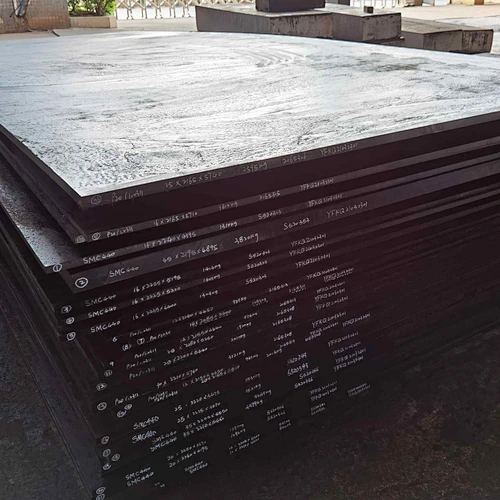
4140 Alloy steel Plate & flat bar size dimension
| Thickness range(mm) | Width range(mm) | Length range(mm) |
| Rolled big plate | 13-200 | 2000-2300 | 3000-5800 |
| Rolled Flat bar | 13-200 | 205-1500 | 2000-2300 |
| Forged Block | 205-800 | 610-1600 | 2500-5800 |
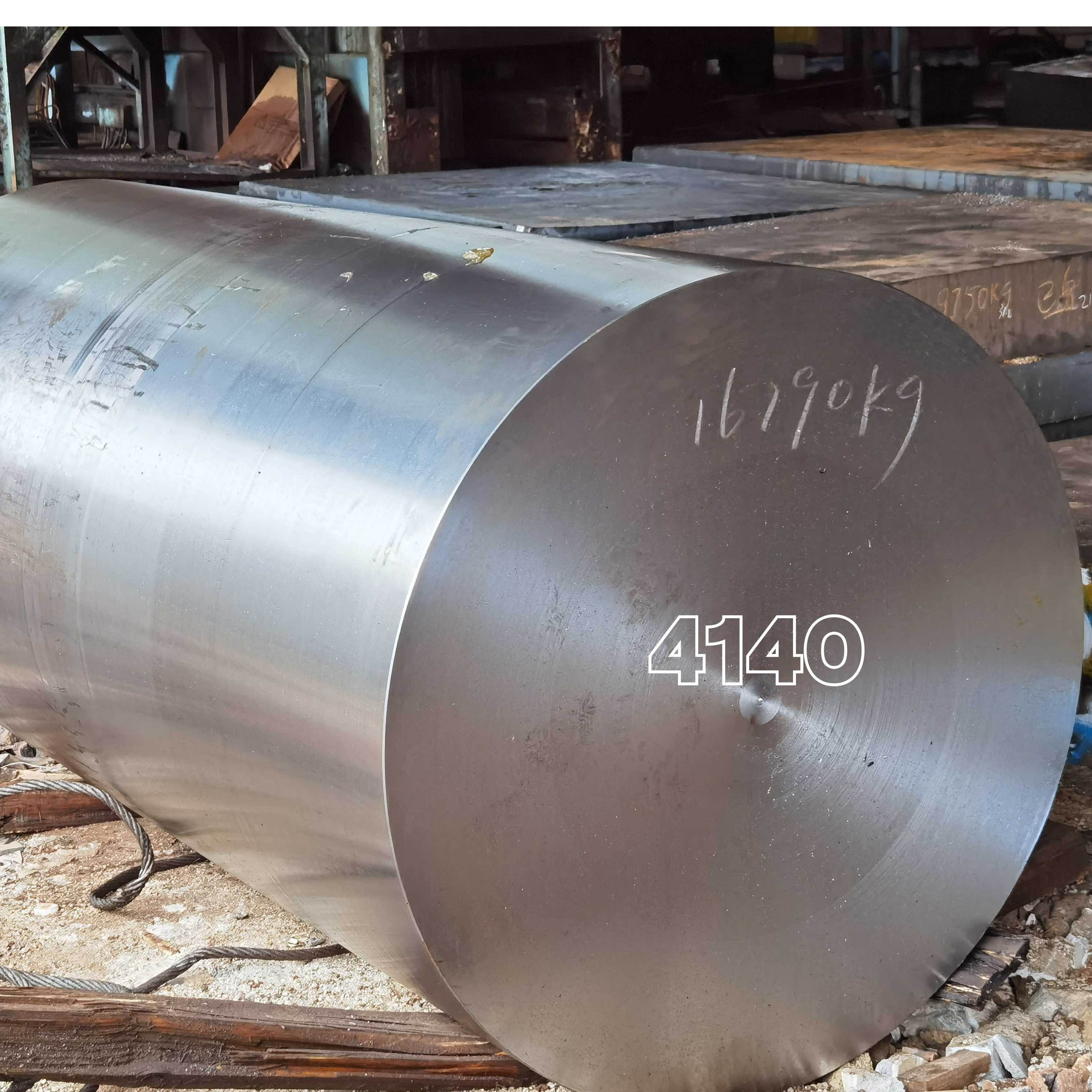
4140 Alloy steel round bar size dimension
| Diameter range(mm) | Length range(mm) |
| Rolled Round bar | 20-250 | 3000-5800 |
| Forged Round bar | 250-120 | 3000-5800 |
4.4140 Alloy Steel Mechanical Properties
Properties | Metric | Imperial |
Tensile strength | 655 MPa | 95000 psi |
Yield strength | 415 MPa | 60200 psi |
Bulk modulus (typical for steel) | 140 GPa | 20300 ksi |
Shear modulus (typical for steel) | 80 GPa | 11600 ksi |
Elastic modulus | 190-210 GPa | 27557-30458 ksi |
Poisson's ratio | 0.27-0.30 | 0.27-0.30 |
Elongation at break (in 50 mm) | 25.70% | 25.70% |
Hardness, Brinell | 197 | 197 |
Hardness, Knoop (converted from Brinell hardness) | 219 | 219 |
Hardness, Rockwell B (converted from Brinell hardness) | 92 | 92 |
Hardness, Rockwell C (converted from Brinell hardness. Value below normal HRC range, for comparison purposes only) | 13 | 13 |
Hardness, Vickers (converted from Brinell hardness) | 207 | 207 |
Machinability (based on AISI 1212 as 100 machinability) | 65 | 65 |
Thermal Treatments.
Annealing: 1550F (840C), hold 2 hours, slow cool 50F(30C)/hr. max. to 1200F (650C), then air or furnace cool. Hardness BHN 185/200.
Stress Relieving:
Annealed Material: 1100-1300F (595-740C), hold 2 hrs, air cool.
Hardened Material: 50-100F (30-55C) below last tempering temperature, hold 2 hrs, air cool.
Straightening: Best done warm 400-800F (205-425C)
Hardening: (Atmosphere or Vacuum Furnace)
Preheat: 1250-1300F (675-705C), equalize
High Heat: 1550-1600F (840-870C), soak 10 to 30 minutes. For vacuum hardening, use the high side of the high heatrange and soak times.
Quench: Oil quench to hand warm, 150F (650C). Temper immediately. Water quenching from 1550F (840C) may beused for simple shapes and larger sections. Note vacuum furnaces must have oil quench capability to achieve
comparable results.
Temper: Tempering at 400-1200F (205-650C) for 1 hour per inch (25mm) of thickness at temperature is recommended
(2 hrs min). Air cool to room temperature.
Welding
Medium carbon steel filler material.
Annealed Material:
Preheat: 400F (205C)
Post heat: 500-600F (260-315C)
Hardened Material:
Preheat: 50F (30C) less than last tempering temperature.
Postheat: 50F (30C) less than last tempering temperature.
5.4140 Alloy Steel Typical Applications
4140 is the preferred material for high-stress engineering components:
Oil & Gas Industry: Drill collars, tool joints, and valve bodies.
Automotive & Aerospace: Axles, crankshafts, steering knuckles, and high-tensile bolts.
Machinery Parts: Gears, pinions, conveyor rollers, and heavy-duty shafts.
Tooling: Ejector pins, mold bases, and high-strength fasteners.
6.Delivery time:3-10days for ready stock
15-60days for new production products
------------------------------------------------------------------------------------------------------------------------------