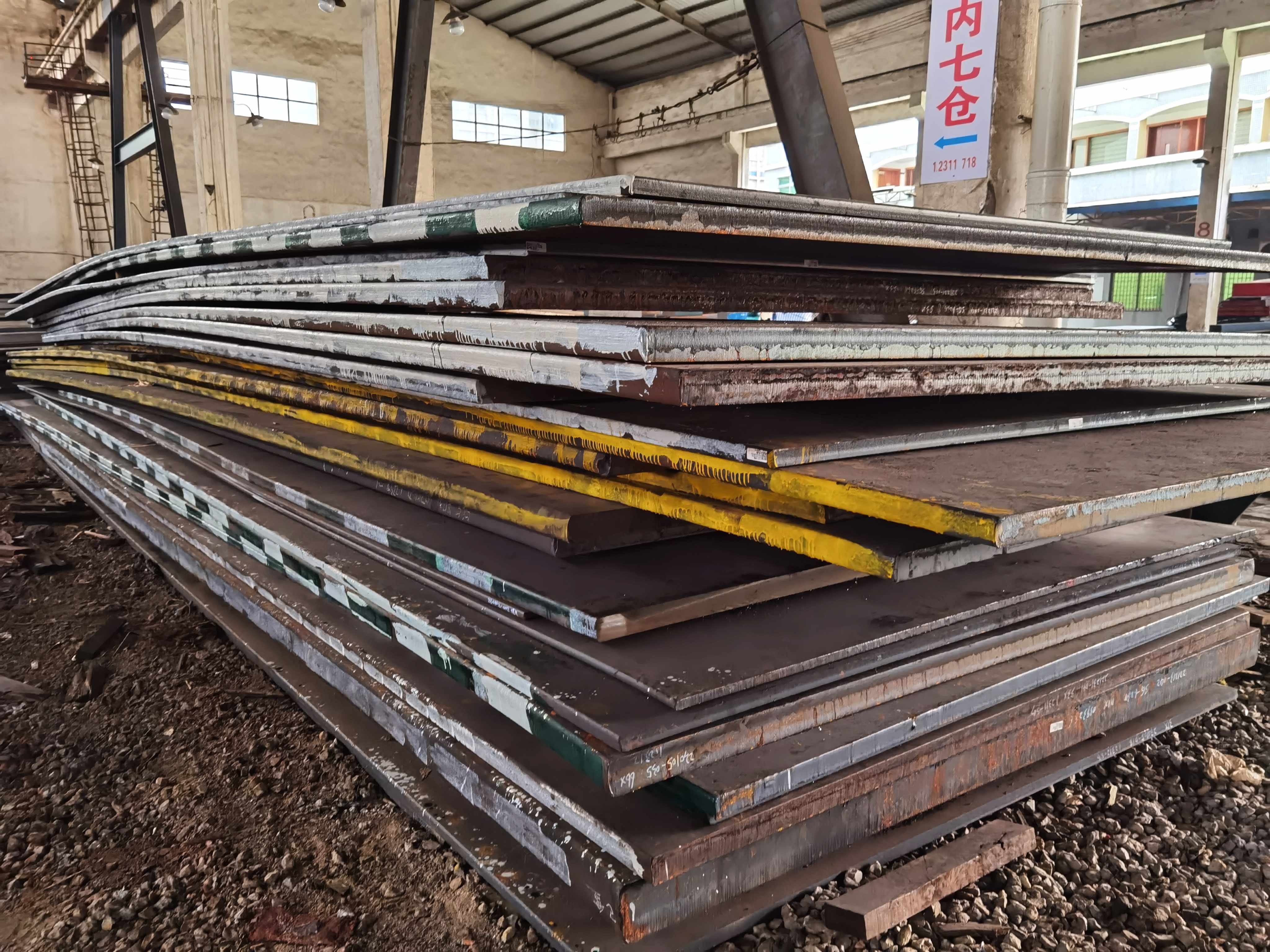
3 Common "Low-Price Traps" in Mold Steel Procurement: Insights from a 15-Year Veteran
In my 15 years in the mold steel industry, I am often asked: "Jerry, why is your quotation higher than others for the same specifications?"
In foreign trade, the pursuit of cost-effectiveness is instinctual. However, mold steel—the "cornerstone" of industrial manufacturing—follows a transparent pricing logic. If a quote is significantly lower than the market average, it often hides pitfalls that are difficult to detect at first glance.
Today, as a veteran in the field, I would like to break down three common traps in mold steel procurement.
1. Substituting Quality: The "Missing" Chemical Composition
This is the most common trap. When sourcing high-alloy steels such as D2 or H13, low-price suppliers often provide "non-standard" or "recycled" materials.
-
The Trap: While the hardness may meet requirements in the short term, the insufficient content of key alloying elements like Chromium (Cr), Molybdenum (Mo), and Vanadium (V) leads to cracking or severe wear after only a few thousand cycles.
-
Veteran Advice: Don’t just look at the hardness report. A genuine, traceable Mill Test Certificate (MTC) is the baseline. At our company, we insist on providing a clear, detailed inspection report with every shipment, because we know that the material costs saved by the client today often turn into expensive mold repairs tomorrow.
2. Cutting Corners on Process: The Missing "Heat Treatment" and "UT Testing"
Some quotes are tempting because suppliers cut corners on processes that are invisible to the naked eye.
-
The Trap: High-quality mold steel requires sufficient Forging Ratio and rigorous Ultrasonic Testing (UT Test) to ensure internal integrity—free from inclusions or cracks. Low-price materials often skip these high-standard inspection processes or shorten annealing times.
-
Veteran Advice: The value of mold steel lies not just in the raw block, but in the "purity" of its internal structure. When selecting a supplier, ask about their inspection standards (e.g., SEP 1921 Class C/c or D/d). "Invisible quality" is your best cost insurance.
3. Hidden Costs: The Lack of "Delivery Certainty"
Often, a low price is a reflection of poor service granularity.
-
The Trap: The contract price may look attractive, but you later discover the cost of poor packaging leading to rust, dimensional tolerances exceeding machining limits, or chaotic document naming leading to customs clearance delays—or even heavy demurrage charges. These "hidden costs" far outweigh the money saved on the initial unit price.
-
Veteran Advice: Focus on the supplier’s delivery system. As we have always insisted: cargo photos must follow a logical flow, file naming must be standardized, and all documents must be in Times New Roman for readability. This kind of "professional certainty" is what truly helps you navigate and avoid the vast majority of risks in overseas transactions.
There is a saying in the foreign trade industry: "The most expensive material is often the cheapest one you bought."
Since our founding in 2005, Dongguan Yufang Steel Co., Ltd. has served many industry leaders, including BYD and Vanward. These companies choose us not because we offer the lowest price in the market, but because of the "certainty" we provide throughout the complex production and supply cycle.
If you are looking for more than just steel—if you are looking for a long-term partner who solves pain points and helps you avoid pitfalls—feel free to reach out. Let’s talk.